
Somerset County Previous Residents Sources
Different records answer different parts of an address history. The county deed index identifies recorded transfers and the legal land description. Historical directories, phone books, and census schedules can show a household at an address. Maps help date the structure rather than a person. Probate and obituary material can place a death or estate transfer at the end of a trail. The strongest Somerset County search combines them instead of treating one result as a complete occupancy history.
| Source | Years it covers | Where held | What it shows |
|---|---|---|---|
| County deed index and images | Current index; online start year not stated | County Clerk AcclaimWeb and Records Room | Transfers, legal description, consideration, liens |
| County deed books | County formation forward; Archives microfilm through 1900 | NJ Archives, Clerk, FamilySearch | Grantor and grantee chain |
| Somerville directories | 1851-1933; 1939-present | SCLSNJ | Occupant, address, occupation |
| Poll-tax and phone directories | 1887-1938; 1911-present with gaps | SCLSNJ local history | Address layers and subscribers |
| Federal census | 1790 onward, subject to release | Census and SCLSNJ resources | Household and enumeration information |
| Sanborn map | Somerville 1917; later local references | LOC and SCLSNJ | Building footprint and use |
For a recent transfer, begin with the parcel and the most recent deed. For an older household, begin with the closest directory year, then use the deed description and census to test whether the address refers to the same place.
Somerset County Parcel Identity
Freeze the modern identity of the property before following past residents. Record the municipality, situs address, parcel PIN, block and lot, current owner, and legal description. The situs is the physical land or building address. The mailing address is where tax notices are sent. The legal description is the deed's land identity. They can differ, so a mailing address is not evidence that the owner lived at the parcel.
The practical current route is municipal assessment system, county GIS, then AcclaimWeb. The municipal assessor can provide the current property-card layer where the town exposes it. County GIS adds geometry and tax identifiers, but the redesigned viewer redacts owner names. When that happens, use the municipal assessment system or a recorded document for the owner name, and retain GIS for the block, lot, roads, and parcel shape.
Somerset County Deed-Chain Search
The County Clerk's AcclaimWeb land-record index is the recorded-transfer layer for past-household research. It offers Name, Book/Page, Instrument Number, Legal Description, Document Type, Consideration, Record Date, and Alpha Index modes. The index is free to search, while images require a free account. The Records Room is another access channel: staff can explain the computerized index, but they do not conduct a title search. That distinction keeps the chain in the researcher's hands.
- Use the current assessment or parcel record to save the legal description, block and lot, and current owner.
- Find that owner's latest purchase deed in AcclaimWeb by name and approximate date.
- Confirm that the legal description or block and lot matches the target property, then record the prior grantor, instrument number, book and page, and deed date.
- Search the prior owner as a grantee in an earlier period to locate that person's purchase.
- Repeat the comparison backward, using legal-description and subdivision terms when the street address is absent or has changed.
- Grantor
- The party transferring an interest in a recorded instrument.
- Grantee
- The party receiving an interest in that instrument.
- Chain of title
- The sequence of recorded transfers connected by a property description.
- Legal description
- The lot, block, subdivision, or metes-and-bounds wording that identifies land in a deed.
Somerset County Deed Books Before 1900
Somerset County's record history extends beyond the online display. The New Jersey State Archives says county deed books begin with the county's formation and holds microfilm copies of Somerset deeds through 1900. It also describes county mortgages through 1850 and says all county deeds have been digitized on FamilySearch. The County Clerk remains the custodian of original county deeds. When an online result cannot bridge the next transfer, the Archives, FamilySearch, and Records Room are the documented fallback chain.
New Jersey State Archives genealogical collections provide the archival context for the early-record route.
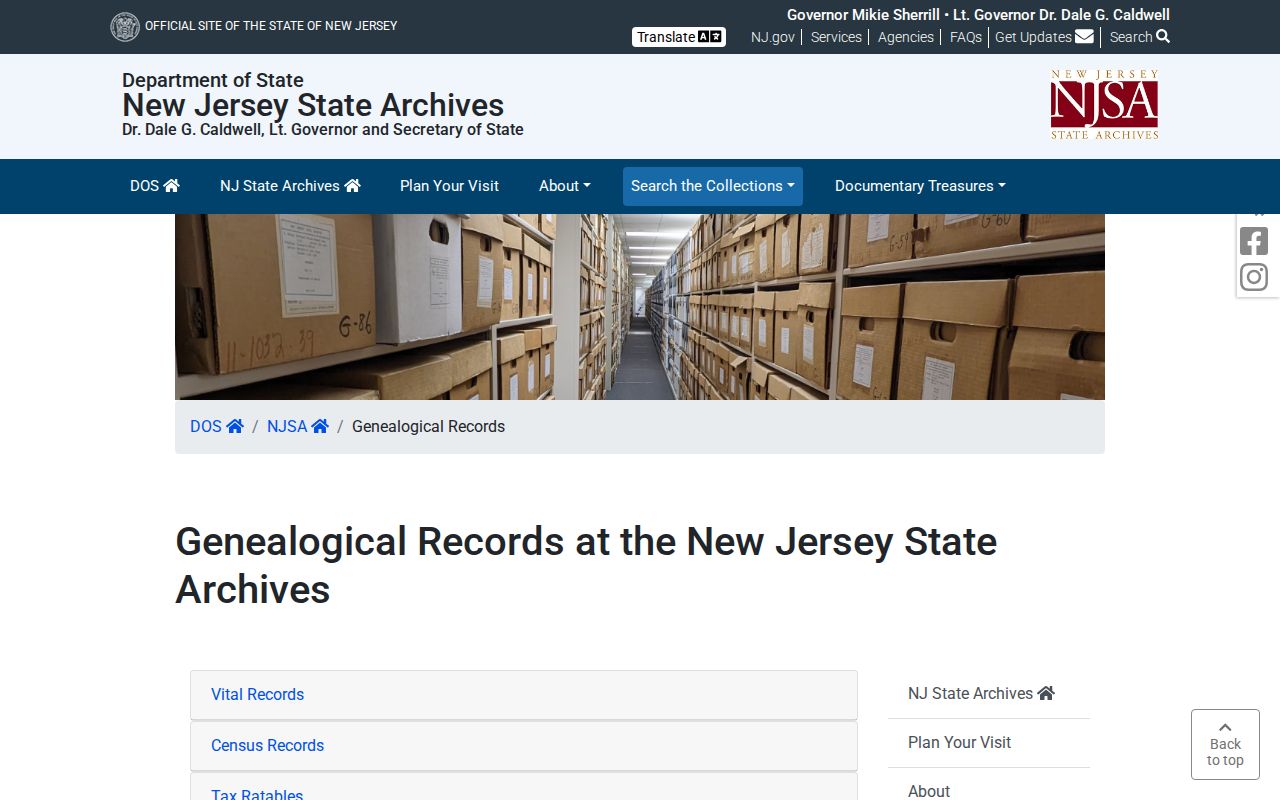
The archive route is especially useful where an old deed uses a lot, subdivision, or metes-and-bounds description instead of a familiar street number.
Do not state an online cutoff year for AcclaimWeb. The public search page did not state one. Use the date and description found in a result, then move to the older book, microfilm, or digitized collection when the trail stops.
Early material can extend the parcel story beyond ordinary deeds. The State Archives identifies Somerset County Loan Office mortgages from 1724 to 1799 in collection guides and a manuscript search room index. It also lists tavern-license applications from 1782 to 1876, including a card-file name index and film through 1850. Those sources are not occupancy rolls. They can, however, place an owner, business operator, or family in a village setting before regular local books become useful. Record the series name, date, and repository so that a later researcher can distinguish an indexed mention from a recorded transfer.
Probate is another endpoint rather than a replacement for the deed chain. Somerset Surrogate books begin around 1804, and the Archives holds original wills and inventories through 1900 with microfilm to 1952. An executor, heir, inventory, or estate transfer can help date a change in ownership, but the legal description and later conveyance still need to be checked against the target parcel.
Somerset County Directory Eras
Historical directories supply the household layer that deeds cannot. SCLSNJ describes Somerville books organized by name from 1851 through 1933 and by ward, precinct, and address from 1939 forward. The poll-tax directory runs from 1887 through 1938 and is organized by ward, precinct, and street address, but before 1920 it lists only men. Telephone directories begin in 1911 with gaps. Each source can support a past-residents lead, yet none is a complete list of everyone at an address.
A directory address can identify an occupant when the deed identifies an owner. The collections and their access details are covered on the Somerset County city directory page. For this backward trail, copy just enough from each volume to compare the property, household, date, and name variants with the next record.
Somerset County Previous Residents and Census
Pair directory years with federal census schedules rather than forcing either source to do all the work. The Somerville local-history room lists 1790 to 1910 census microfilm and 1790 to 1940 online Ancestry access, while public federal schedules follow the 72-year rule. A census household can give age, birthplace, and occupation alongside the address. A directory can narrow the time between enumerations. Their dates differ, so an address shift may be a real move rather than an error.
- Choose the directory edition closest to the transfer or household date being tested.
- Copy the address, name spelling, initials, and household notation exactly.
- Locate the nearest released census and compare household members, age, birthplace, and address evidence.
- Check the next directory edition for a move, widow notation, or changed entry.
- Use an obituary or probate record to test whether an apparent departure was a death or estate transfer.
Messenger-Gazette's searchable obituary index covers 1986 through 2012, and local microfilm supplies a wider time span. An index entry points to a notice. It does not by itself establish the date a household left a property.
Somerset County Sanborn and Permit Clues
The 1917 Somerville Sanborn map can date the physical setting around an address. It can show footprint, building material, stories, street names, use, and adjacent structures. It is not an ownership list. SCLSNJ also notes historic atlases and maps. Compare the map with the directory and deed description when an older address seems to have changed, a subdivision split a lot, or a regional directory used a different local label.
Municipal construction, zoning, and code files can add construction, alteration, certificate-of-occupancy, and inspection dates. There is no unified countywide public permit search for all 21 municipalities. Ask the municipality's construction office by street address and block or lot, then use OPRA for a county or municipal record that is not already available. Exact retention and access differ by town.
For a difficult house-history question, the documented support chain is local history, the Historical Society, the Clerk's Records Room, and the State Archives or FamilySearch deed books. SCLSNJ can help locate Somerville maps, historical volumes, newspaper clippings, and microfilm. The Somerset County Historical Society's Van Horne Library has family files, maps, manuscripts, photographs, and early land records. Its research service asks for detailed names, dates, places, contact details, and payment; the stated service is $30 for up to two hours and typically takes five to eight weeks. Ask for vertical files, subdivision maps, or a specific street-number question rather than a broad title search.
Somerset County Previous Residents Limits
Vital records are not a shortcut for tracing past residents. New Jersey vital records are not public records and cannot be searched online. Genealogical access has separate thresholds: deceased-person birth events more than 80 years old through 1925, marriages more than 50 years old through 1951, and deaths more than 40 years old through 1951. The State Archives holds births through 1924 and marriages and deaths through 1950. Certification requires the listed identity, relationship, agency, court-order, or other eligibility route.
New Jersey genealogical vital-record guidance explains the distinct ordering path shown here.
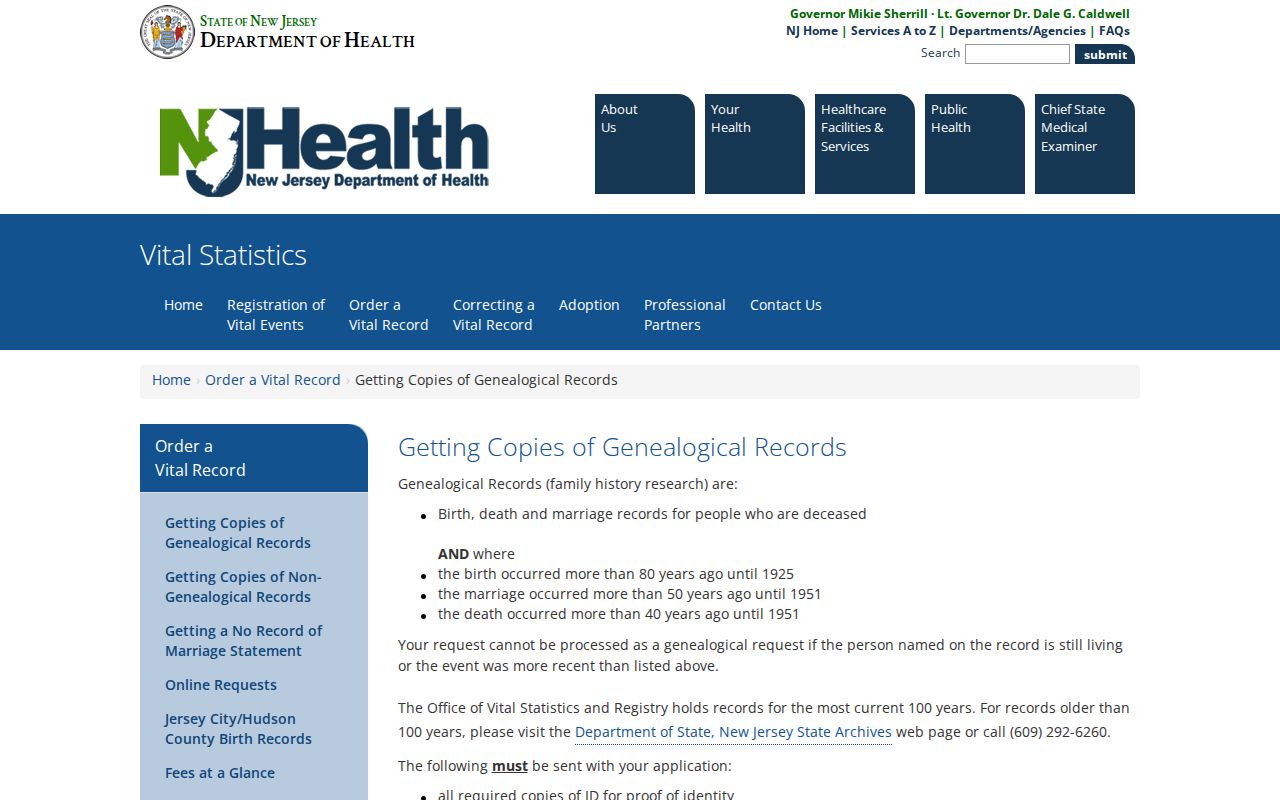
Use eligible vital material to support a documented family-history question, then compare it against deeds, directories, census, probate, and the date of the address record.
Lawful use. Use a Somerset County house-history trail for family history, estate research, personal safety, or property curiosity. Do not use public records to repeatedly contact, threaten, surveil, or intimidate a living person. New Jersey anti-stalking and cyber-harassment laws can apply.